- info@advinno.com
- Mon - Fri: 9.00 am - 6.00 pm
We are creative, ambitious and ready for challenges! Hire Us
We have 20+ years of experience in delivering superior and innovative products
22, Sin Ming Lane, #05-75 Midview City Singapore 573969
info@advinno.com
(+65) 6777-2240 / 6570 6086
Ansys Speos is an advanced optical design and simulation software that uniquely models optical system performance and evaluates final illumination effects based on human vision. With an extensive library of over 4,200 light and material samples, Speos enables engineers to predictively prototype optical systems and validate designs before physical build.
Advinno Technologies provides access to Ansys Speos for applications spanning automotive lighting, AR/VR displays, head-up displays, consumer electronics, and medical devices. Speos reduces prototyping costs, meets safety standards, and optimizes lighting performance in complex optical environments.
The Speos lighting system modeler provides in-depth understanding of how light behaves within a system by modeling and analyzing luminous flux. The lighting system analyzer enables engineers to study and compare lighting system and material efficiency while calculating spectral luminance, accurately predicting stray light, hot spots, and uniformity across complex optical assemblies.
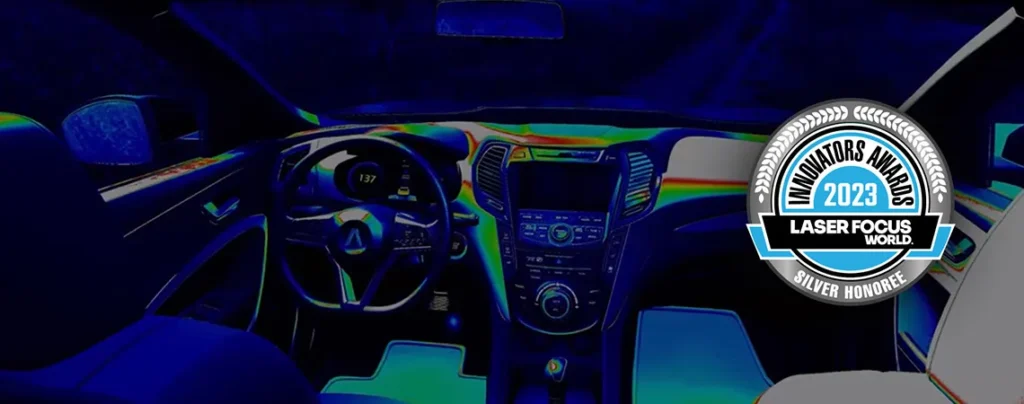
Speos includes a unique human vision component that enables visual prediction based on physiological human vision modeling, allowing engineers to evaluate exactly how an end-user will perceive the final lighting design. The Speos Live Preview function provides interactive simulation and rendering so designers can see illumination results from the start of the design process.
Speos supports advanced optical applications including AR/VR head-up displays and autonomous vehicle sensing systems, with freeform lens design tools that add 2D illuminance targets and automatically create lens back faces to achieve specific beam patterns. Speos helps designers control light pollution and create custom light distributions for demanding display and sensing applications.