- info@advinno.com
- Mon - Fri: 9.00 am - 6.00 pm
We are creative, ambitious and ready for challenges! Hire Us
We have 20+ years of experience in delivering superior and innovative products
22, Sin Ming Lane, #05-75 Midview City Singapore 573969
info@advinno.com
(+65) 6777-2240 / 6570 6086
Ansys Lumerical is a comprehensive photonics simulation suite providing best-in-class solvers for the design and analysis of nanophotonic and integrated photonic devices. The suite combines FDTD, MODE, INTERCONNECT, and Multiphysics solvers in a unified environment, enabling engineers to model real-world photonic effects at chip, component, and system levels.
Through Advinno Technologies, engineers access Lumerical for applications in silicon photonics, photonic integrated circuits (PICs), optical communications, CMOS image sensors, and nanophotonic devices. Lumerical’s foundry-calibrated compact models and PDK-based workflows shorten time to market and reduce the risk and cost of physical prototyping.
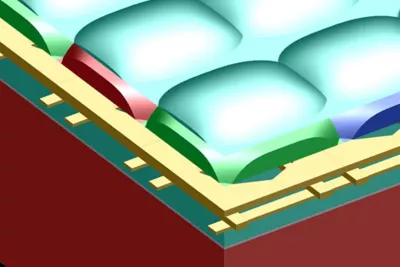
Ansys Lumerical FDTD integrates finite-difference time-domain, RCWA, and STACK solvers in a single design environment, delivering best-in-class solver performance for nanophotonic device simulation. FDTD enables precise analysis and optimization of diffraction gratings, multilayered coatings, uLEDs, CMOS image sensors, metalenses, and metasurfaces.
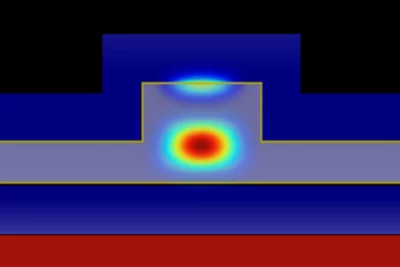
Ansys Lumerical MODE combines bidirectional eigenmode expansion (EME), varFDTD, and finite difference eigenmode (FDE) solvers to deliver accurate spatial field, modal frequency, and mode overlap evaluations. Engineers use MODE to reliably predict waveguide propagation, coupler performance, and photonic component behavior in silicon photonic and III-V platforms.
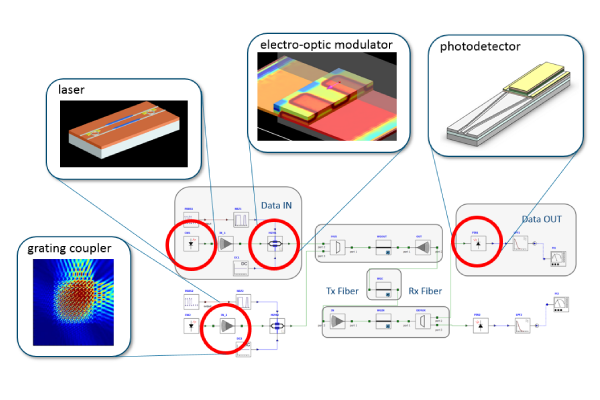
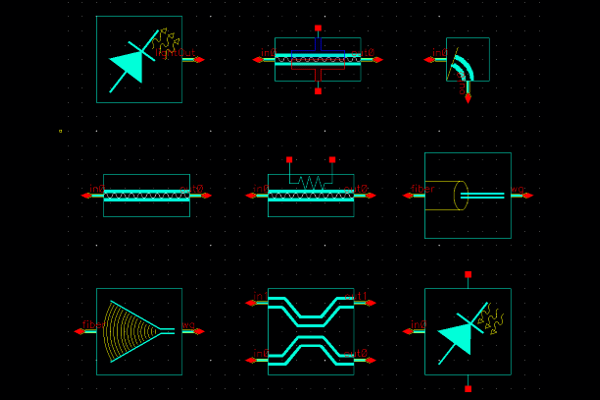
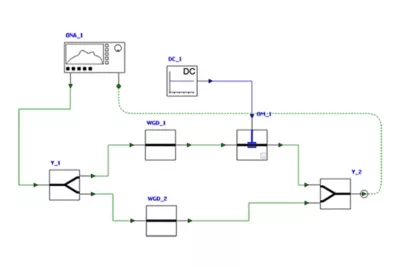
Ansys Lumerical INTERCONNECT provides system-level photonic circuit simulation, enabling engineers to model complete photonic integrated circuits from individual components to full chip-level systems. Multiphysics co-simulation integrates electro-optic, thermo-optic, and mechanical effects, and the Python LumAPI enables automated simulation workflows and seamless integration with existing design pipelines.